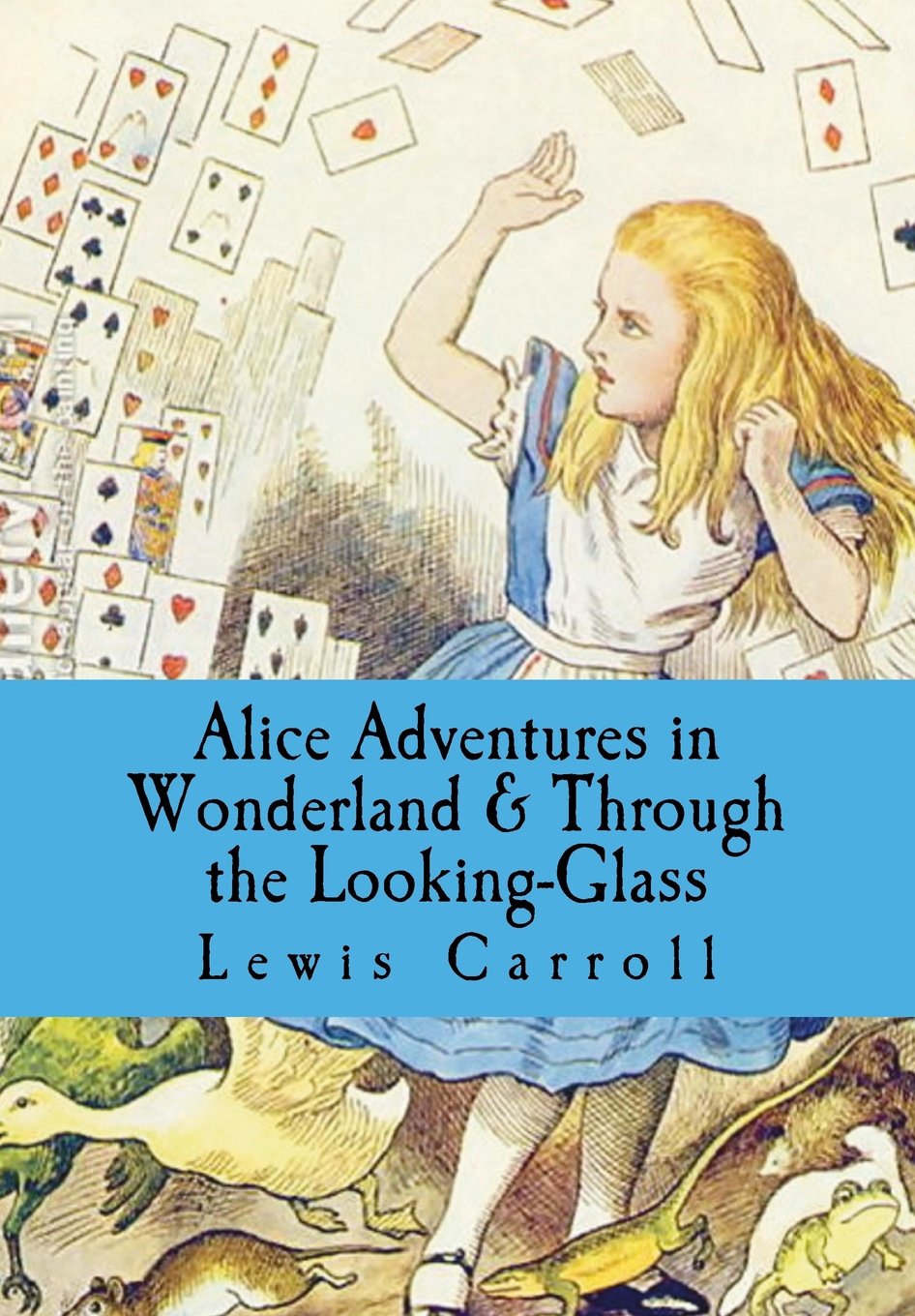
Alice’s Adventures in Wonderland & Through the Looking-Glass
Overview
Lewis Carroll’s two Alice books plunge a rational, polite Victorian child into worlds governed by absurd logic, linguistic paradox, and constantly shifting rules, using nonsense as a serious philosophical and literary device. Wonderland (1865) is structured as a descent and series of encounters with characters who embody different forms of irrationality, while Through the Looking-Glass (1871) uses the formal structure of a chess game to explore mirror-inversions of logic, time, and identity. Written by the mathematician Charles Dodgson under his pen name, the books operate simultaneously as children’s fantasy, social satire, and explorations of language, meaning, and the nature of selfhood.
Key Concepts
Nonsense as Philosophical Method
- Logical paradox — Carroll, a logician by training, constructs dialogues that expose hidden assumptions in everyday reasoning: the Mad Hatter’s tea party satirises circular argumentation, while Humpty Dumpty’s claim that words “mean just what I choose them to mean” raises genuine questions about semantic authority
- Wordplay and polysemy — puns, portmanteaux (“slithy” = slimy + lithe), and homophone confusion are not mere jokes but demonstrations of how language’s ambiguity can undermine the stable meanings on which rational discourse depends
- Rules without reasons — Wonderland’s inhabitants enforce arbitrary rules with absolute confidence (“Sentence first — verdict afterwards”), mirroring the way social conventions can appear rational from inside a system but absurd from outside
Identity and Transformation
- Physical instability — Alice’s repeated changes in size (eating, drinking, mushroom) dramatise the Victorian child’s experience of a body and self in flux; each transformation forces her to renegotiate her relationship with the world around her
- “Who are you?” — the Caterpillar’s question becomes the book’s central philosophical puzzle; Alice struggles to answer because identity, in Carroll’s world, is not a fixed property but a process of continuous reconstruction
- The Looking-Glass self — the mirror-world inverts not just left and right but causality (memory of the future, punishment before the crime) and social logic, suggesting that identity is partly constituted by the framework in which one exists
Social Satire and Victorian Critique
- Education and rote learning — Alice’s attempts to recite memorised poems and multiplication tables go hilariously wrong in Wonderland, parodying the Victorian emphasis on rote education over understanding
- Authority without legitimacy — the Queen of Hearts (arbitrary tyranny), the Duchess (moralising without substance), and the White Knight (well-meaning incompetence) caricature different forms of adult authority as experienced by a child
- Class and manners — Wonderland’s obsession with etiquette (seating arrangements, proper introductions, tea-party protocols) satirises the elaborate social codes of Victorian England by showing how they become oppressive when divorced from genuine courtesy
Formal Structure and Mathematical Play
- Chess as narrative architecture — Through the Looking-Glass follows a literal chess game, with Alice as a pawn advancing to the eighth rank to become a queen; the structure imposes rules on the narrative that mirror the constraints of formal systems
- Infinity and recursion — the Red King dreaming Alice who is dreaming the Red King creates an infinite regress; Tweedledee and Tweedledum’s symmetric arguments encode the logical concept of duality
- Carroll as Dodgson — the mathematical substructure reflects Dodgson’s professional interests in symbolic logic, Euclidean geometry, and the foundations of arithmetic, making the books legible on a level entirely invisible to most child readers
Related Books
- The Stuff of Thought - Pinker uses language structure to probe cognition; Carroll uses it to subvert cognition — both reveal how meaning depends on shared rules
- Ondraaglijke Lichtheid - Both explore what happens when language undermines its own surface meaning — nonsense vs irony
- The Etymologicon - Forsyth follows words through centuries of drift; Carroll invents words to expose the same instability of meaning
Parent: Books