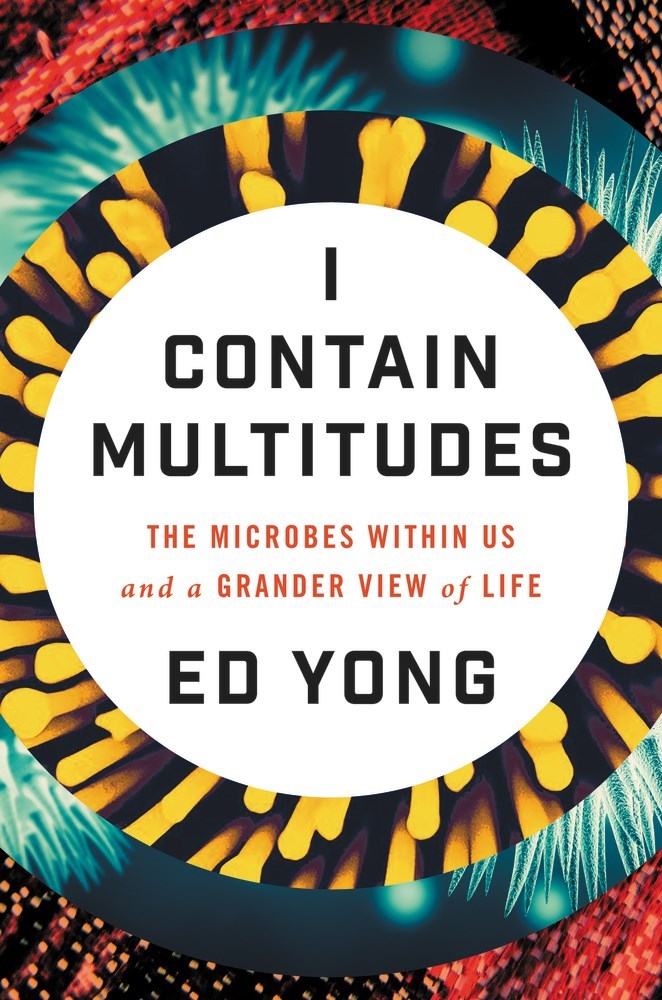
I Contain Multitudes: The Microbes Within Us and a Grander View of Life
Overview
Ed Yong’s “I Contain Multitudes” dives into the fascinating world of microbes living within us. From bacteria that help us digest food to viruses that shape our immune system, these tiny organisms play a far bigger role than just causing sickness.
Key Concepts
Ubiquity and Co-evolution
- Microbes are everywhere and always have been: Bacteria dominated the planet for ~3 billion years before multicellular life appeared; every animal and plant that has ever evolved did so in a world already saturated with microbes. Yong’s central reframing is that multicellular organisms are not autonomous units but ecosystems — assemblages of host cells and microbial partners shaped by co-evolution
- Numbers in perspective: The human body harbours roughly as many bacterial cells as human cells (~38 trillion each); the collective genome of the microbiome encodes ~100× more genes than the human genome, vastly expanding the metabolic repertoire available to the host
- Colonisation and assembly: Each animal acquires its microbiome through a combination of vertical transmission (from parent, e.g., birth canal, breast milk) and horizontal acquisition (from the environment); the community that assembles in early life has lasting effects on immune development, metabolism, and even behaviour
Microbiome Functions — What Microbes Do for Their Hosts
- Digestion and metabolism: Many animals depend on microbial symbionts to break down food they could not digest alone — termites rely on gut protists and bacteria to break down cellulose into short-chain fatty acids; ruminants use anaerobic rumen bacteria and archaea for the same purpose; the human gut microbiome ferments dietary fibre into butyrate (an energy source for colonocytes) and synthesises vitamins (K, B12, folate)
- Nutritional symbioses: Some of the most extreme examples involve insects with intracellular bacterial endosymbionts (e.g., Buchnera in aphids, which synthesises essential amino acids absent from the insect’s phloem-sap diet)
- Immune system development and regulation: The microbiome is essential for training the immune system to distinguish “self” from “non-self” and to calibrate inflammatory responses; germ-free mice (raised without microbes) have underdeveloped immune systems, thin intestinal walls, and heightened susceptibility to pathogens
- Colonisation resistance: A healthy, diverse microbiome protects against pathogenic invaders by competing for nutrients and attachment sites, producing antimicrobial compounds (bacteriocins), and modulating the immune response
- Behaviour and the gut–brain axis: Microbial metabolites (short-chain fatty acids, tryptophan derivatives, GABA) can influence brain function, mood, and behaviour via the vagus nerve, immune signalling, and endocrine pathways; altered microbiome composition has been associated with anxiety, depression, and autism spectrum traits in animal models
Ecological Dynamics
- Horizontal gene transfer (HGT): Bacteria routinely exchange genetic material through conjugation, transduction, and transformation — transferring entire metabolic pathways, antibiotic resistance genes, and virulence factors between species in hours rather than generations. This means that microbial communities adapt far faster than host evolution alone could achieve
- Antibiotic resistance: HGT is the primary mechanism by which antibiotic resistance spreads through bacterial populations; overuse of antibiotics, in medicine and agriculture, selects for resistant strains and depletes beneficial microbes — a dual threat
- Community assembly and dysbiosis: The microbiome is a dynamic ecosystem subject to ecological principles — competition, cooperation, succession, disturbance, and resilience. Dysbiosis (a disrupted microbial community) is implicated in inflammatory bowel disease, obesity, type-2 diabetes, allergies, and autoimmune conditions
- Restoration ecology: Faecal microbiota transplantation (FMT) — transferring stool from a healthy donor to a patient — has shown dramatic efficacy against recurrent Clostridioides difficile infections; Yong frames FMT as “ecosystem restoration” applied to the gut
Rethinking Individuality
- The holobiont concept: Yong argues that the traditional view of an organism as a single autonomous entity is incomplete; instead, hosts and their microbial partners form a holobiont — a composite unit of selection and function. This challenges classical definitions of individuality in biology
- Beyond good vs. bad microbes: Yong emphasises that classifying microbes as simply “pathogens” or “beneficial” is misleading; most microbes are context-dependent — helpful in one niche, harmful in another, and neutral in most. The relationship between host and microbe exists on a spectrum from mutualism to parasitism, shifting with conditions
Personal Reflection
[To be added]
Related Books
- Immune - The immune system must negotiate with the microbial multitudes Yong describes
- Entangled Life - Extends the symbiosis paradigm from bacteria to fungi
- The Story of the Human Body - Lieberman contextualises the microbiome within human evolutionary history
Parent: Books